Rationality and emotions: two sides of the same coin
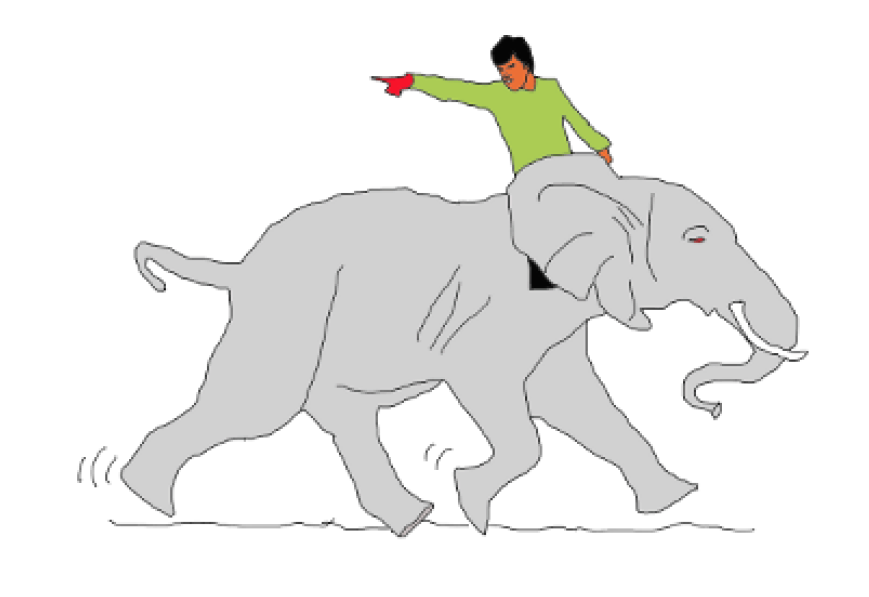
Chip and Dan Heath create the impressive image of the rider and his elephant in their book “Switch. Daring Change and Winning Through It” (2011).
They use the image of the rider as a metaphor for ratio and the elephant as a metaphor for emotion to show possibilities for action.
They have three theses, as they say “surprises”, that broaden our perspective:
- Self-control is a depleting resource
- What looks like laziness in change is often exhaustion
- What looks like resistance in change is often lack of clarity
In the short version, this means:
- The rider needs direction, clarity and crystal clear instructions.
- The elephant needs motivation, its emotional side must be addressed.
- And the way must be paved and pointed out (situation and environment prepared and clarified).
Please, watch this short video (2 min) which explains in a very clear way the rider and elephant metaphor:
This picture illustrates very well: The two only exist in a double pack. The rider stands for reason and wants to think. The elephant stands for emotion, it wants to feel and… steers.
Both work in us in parallel and simultaneously.
Gerald Hüther says: “The brain is not simply connected to the head through the neck, but brain and body form an inseparable functional unit” (Storch/Cantienei/Hüther/Tchader 2010, p.75).
And he goes on to write: ” (…) thinking is to be regarded as inseparably connected with feeling” (p. 76).
Scientifically, this – the functional unity between thinking and feeling – is now considered a fact, whether we are aware of it or not, whether we can accept it or not. In practice, this means in all cases: Where we want to take people along, we need a comprehensible plan that picks people up in their thinking, and a story that touches emotionally and speaks to people in their experience.
The picture is also very vivid for us because we see how small the rider is compared to the elephant. Many people hardly notice the elephant, fixate on the rider and want to see him as the driver. When the rider wants to steer the elephant in a direction it does not want to go, he only succeeds for a short time. Afterwards, he is exhausted and experiences stress. It is therefore important to see the elephant as an ally, to take him along on the journey. When rider and elephant are in agreement, they are a strong team.
Applied to the process of change, this means that we have to give the elephant – the emotions, the unconscious, the involuntary – space, take it with us. The elephant is in the driver’s seat, rational insight is by far not enough to get people moving. Sometimes it takes unusual measures to convince the elephant to take a certain direction, because emotions and feelings want to be felt, not talked over or analysed. Emotions need space, room and time to be felt and processed. Here, imagination, creativity and above all one’s own willingness to feel help. Similar to theatre, where people should also be “carried away”, we as facilitators have to think in terms of dramaturgies and productions in order to address people on an emotional level.